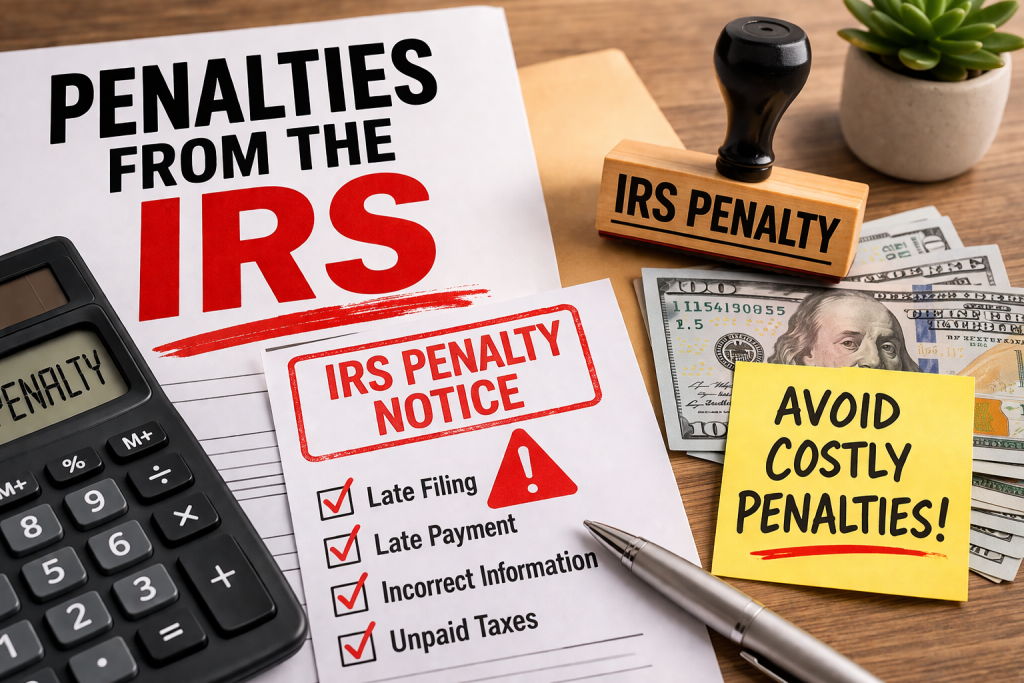
Payroll is one of the most important responsibilities for any business—but it’s also one of the easiest areas to get wrong. Even small mistakes can lead to penalties, unhappy employees, and compliance issues with the Internal Revenue Service.
Understanding the most common payroll errors can help you avoid costly problems and keep your business running smoothly.
1. Misclassifying Employees and Contractors
One of the biggest payroll mistakes businesses make is incorrectly classifying workers as independent contractors instead of employees.
This can lead to:
- Unpaid payroll taxes
- Penalties and interest
- Legal complications
The IRS has strict guidelines for determining worker classification. Getting this wrong can be expensive, so it’s important to evaluate each role carefully.
2. Forgetting to File Payroll Taxes on Time
Payroll taxes must be filed and paid on a regular schedule—whether quarterly, monthly, or semi-weekly.
Missing deadlines can result in:
- Late fees
- Interest charges
- Increased scrutiny from the IRS
Staying organized and aware of deadlines is critical to avoiding unnecessary costs.
3. Not Keeping Track of Receipts and Records
Accurate recordkeeping is essential for payroll compliance. This includes:
- Employee information
- Pay rates and hours worked
- Tax filings and payment confirmations
Without proper records, it becomes difficult to verify information or respond to audits.
4. Errors on Tax Forms
Simple mistakes on payroll tax forms can create big problems. Common errors include:
- Incorrect Social Security numbers
- Wrong wage amounts
- Misreported tax withholdings
Even small inaccuracies can delay processing or trigger notices from the IRS or your State’s Department of Revenue.
5. Filling Out Tax Forms Incorrectly
Beyond simple errors, improperly completing payroll forms can lead to compliance issues.
This might include:
- Using outdated forms
- Missing required information
- Incorrect calculations
Ensuring forms are filled out correctly the first time saves time and prevents complications later.
6. Overlooking Fringe Benefits
Fringe benefits—such as bonuses, company vehicles, or certain reimbursements—may be taxable.
Failing to account for these can result in:
- Underreported income
- Incorrect payroll taxes
- Potential penalties
Understanding which benefits are taxable is key to accurate payroll reporting.
7. Ignoring Wage Garnishments
If an employee has a wage garnishment (such as child support or tax levies), employers are legally required to withhold and remit those amounts.
Failing to handle garnishments properly can lead to:
- Legal consequences
- Employer liability
- Additional penalties
It’s important to manage these obligations carefully and consistently.
Legal Challenges and Repercussions
Each year, one of the biggest challenges businesses encounter when handling their own payroll is dealing with penalties and fines. These costs can add up quickly and can be extensive.
In fiscal year 2024, the IRS brought in $120.2 billion from previously unpaid tax liabilities tied to returns showing additional amounts owed. After accounting for credit transfers, the net amount collected totaled $77.6 billion.
That same year, the IRS assessed $17.8 billion in extra taxes related to returns that were filed late and recovered nearly $3.2 billion from those delinquent filings.
Additionally, taxpayers submitted 33,591 offers in compromise in an effort to resolve their tax debts for less than the full balance. Of those submissions, the IRS approved 7,199 offers, resulting in $163.4 million collected.
To refer to this information that originated directly from the IRS website, click on the link provided. https://www.irs.gov/statistics/collections-activities-penalties-and-appeals
Reports also show that 40% of small businesses end up paying average penalties of $850 or more each year due to payroll inaccuracies. https://www.timetrex.com/blog/small-business-payroll-error-stats
Commonly Used IRS Notices
Some of the more frequently received forms from the IRS regarding penalties are:
- CP14 – Notice of Tax Due and Demand for Payment
- CP134 and CP134B – Payment Adjusted Amount Due
- CP 2000 – Income reported on your payroll tax return does not match information from third parties, or filed with the Social Security Administration or IRS.
South Carolina Forms Include:
- C293 – Estimated Assessment Notice
How Tax-Me-Not Solutions, LLC Can Help
Payroll mistakes can be costly—but they’re also avoidable with the right support.
Tax-Me-Not Solutions, LLC helps businesses:
- Ensure proper employee classification
- Stay on top of payroll tax deadlines
- Maintain accurate records
- File all required payroll tax returns on time
- Process payroll correctly and efficiently
- Stay compliant with all regulations
With expert guidance, you can reduce risk, save time, and focus on growing your business.
The Bottom Line
Payroll isn’t just about paying employees—it’s about staying compliant, organized, and accurate.
Avoiding these common mistakes can save your business time, money, and stress. If managing payroll feels overwhelming, working with a professional can make all the difference.
Let Tax-Me-Not Solutions, LLC handle the details—so you can focus on what you do best.
Interested in learning more about Tax-Me-Not Solutions, LLC services and if they are right for you? Contact us today at (843) 663-1040 or email us at tnodolf@taxmenot.solutions.